BUILDING OUR FUTURE, FEEDING OUR COMMUNITY
ABOUT THE CAMPAIGN
Neighbors Helping Neighbors
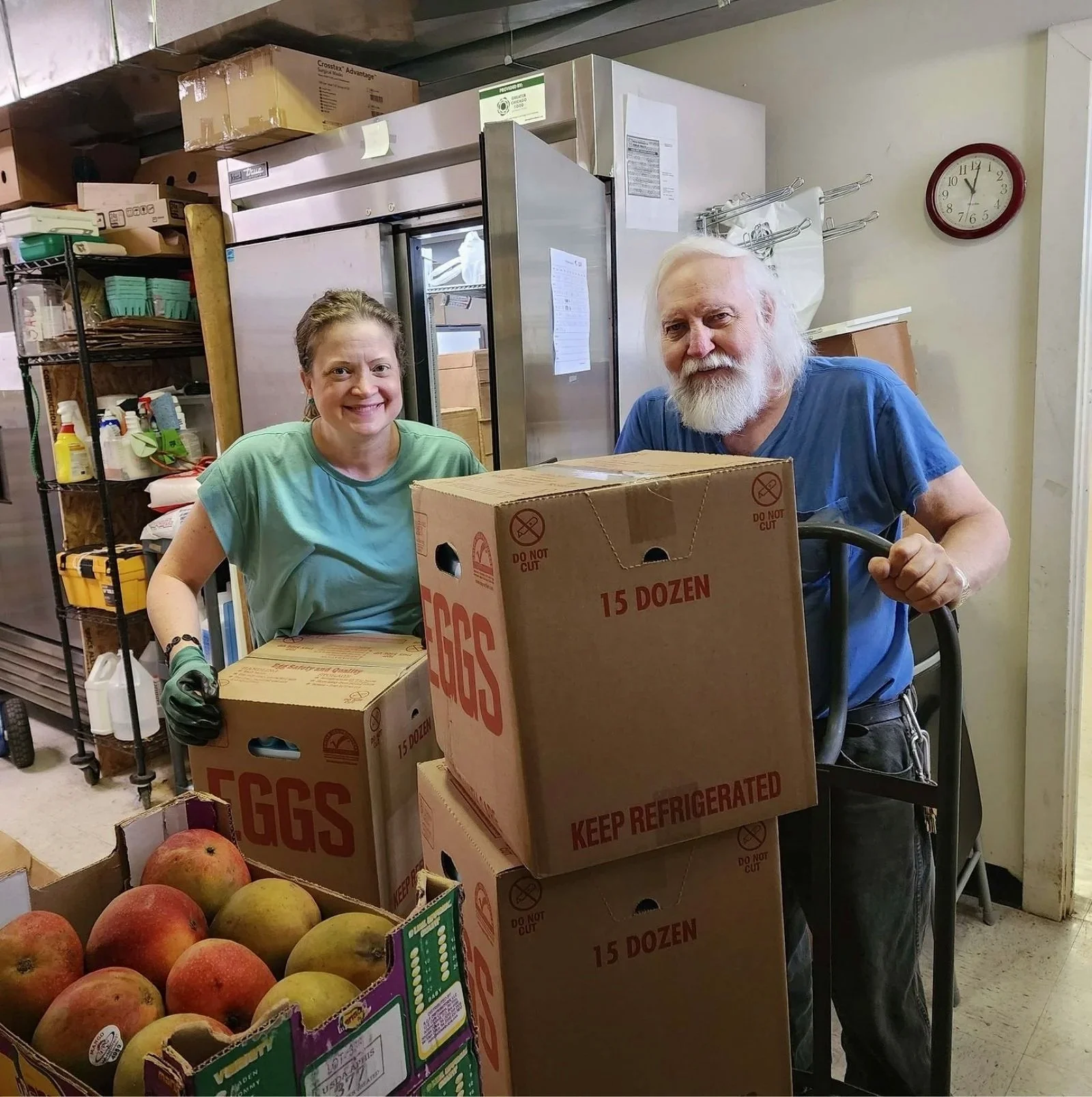
“I have been in a tight spot financially for some time now, and don't make much money at my job. The Pantry has significantly reduced my grocery costs, making it much easier to afford rent.”
~ Pantry client
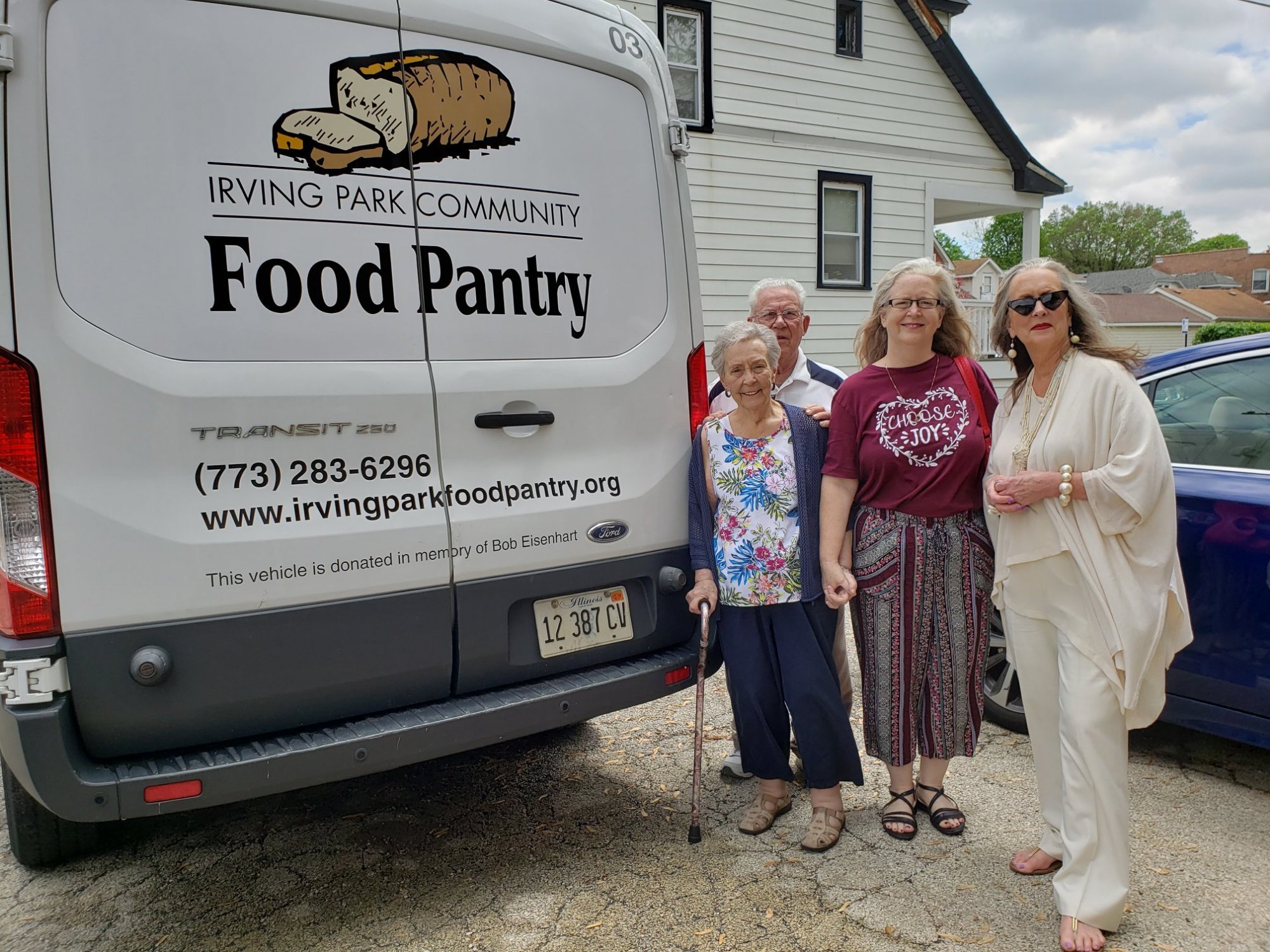
“Everyone should have their basic needs met: food, clothing, shelter. We have so much wealth in this country, there is no reason for people to lack any of these. The Pantry is one way we can meet people’s needs. That’s why I’m invested in this campaign.”
~ Holly Van Essen, campaign chair
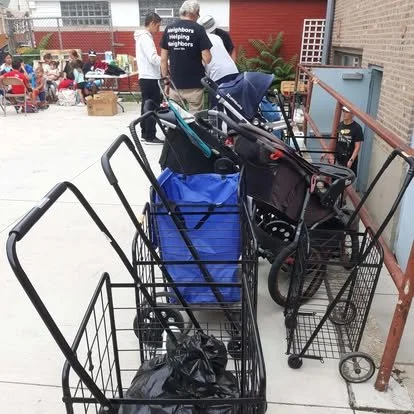
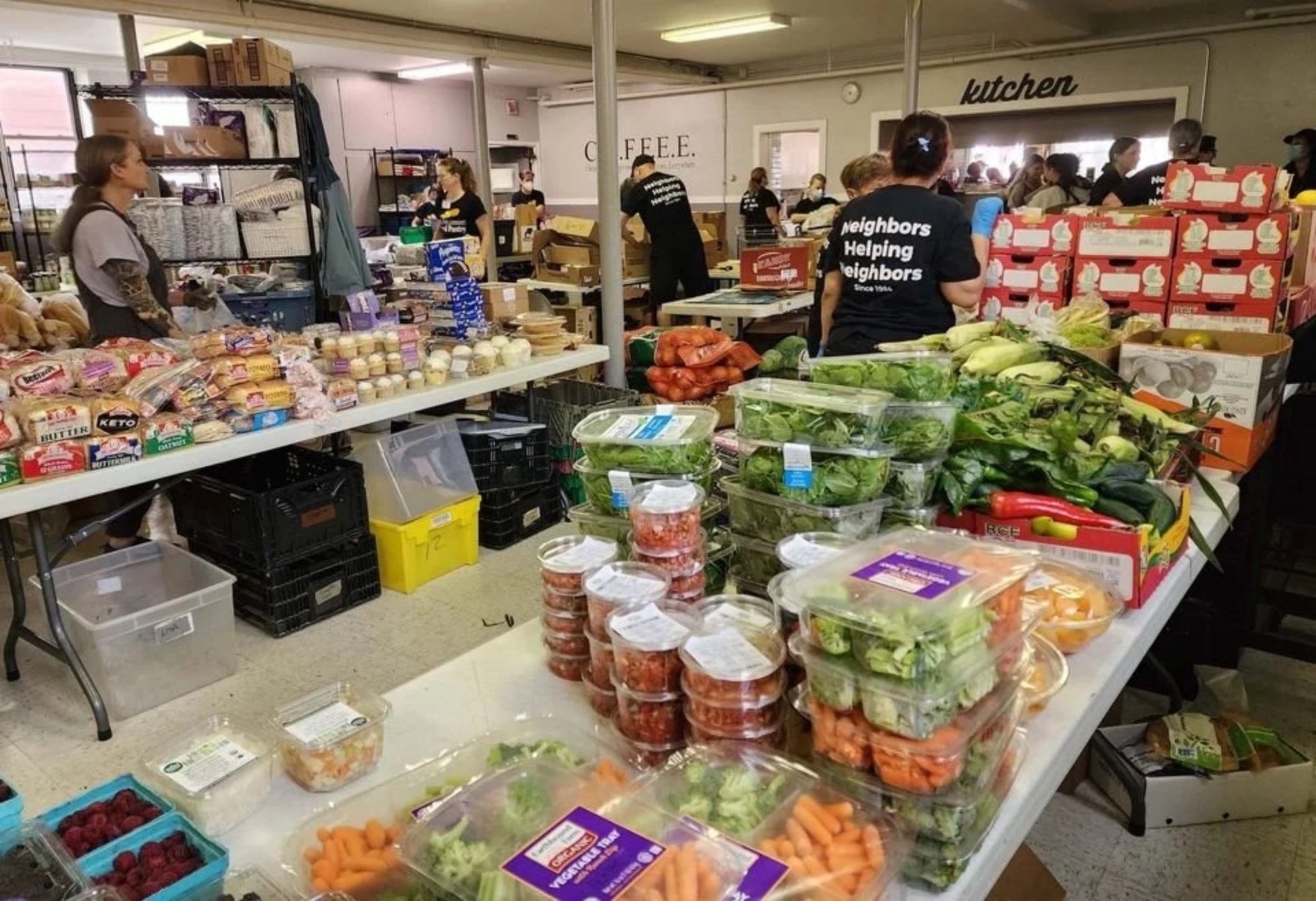
For more than 40 years, the Irving Park Community Food Pantry has been a vital safety net on Chicago’s Northwest Side, providing critical food assistance to neighbors in need. We provide not just food but hope and support to those facing economic hardship.
Still, too many are struggling, and food insecurity often goes unseen.
In the heart of Chicago’s Northwest Side, more than one in ten of our neighbors live below the poverty line. In 2025, Irving Park Community Food Pantry served just 20% of those in need. That means 80% of our neighbors struggling with poverty aren’t being reached.
Is there a more basic human need than having enough food?
And is there a problem more readily solved by neighbors helping neighbors?
Today, we have an opportunity to ensure that we can feed more of our community, not only now, but in the future. With your help, the Pantry will have a purpose‐built long‐term home. We can increase food distributions, expand storage space for more fresh and perishable items, and provide an ADA accessible facility for our clients.
But it’s more than a new building. Your donations will be instrumental in making sure the Pantry can grow its valuable work. We can strengthen and expand services that reduce food insecurity. By replenishing our reserve fund and hiring our first fundraising staff, we will ensure fiscal sustainability.
Read on to learn about our proposed new space: why it’s needed, how it will promote dignity for clients who rely on it, and how your financial support will make a huge impact in their lives.
Join us. Together, we can build our future and feed our community.
Holly Van Essen, Campaign Chair
John Psiharis, Executive Director
GOAL
Building a long-term home for the future.
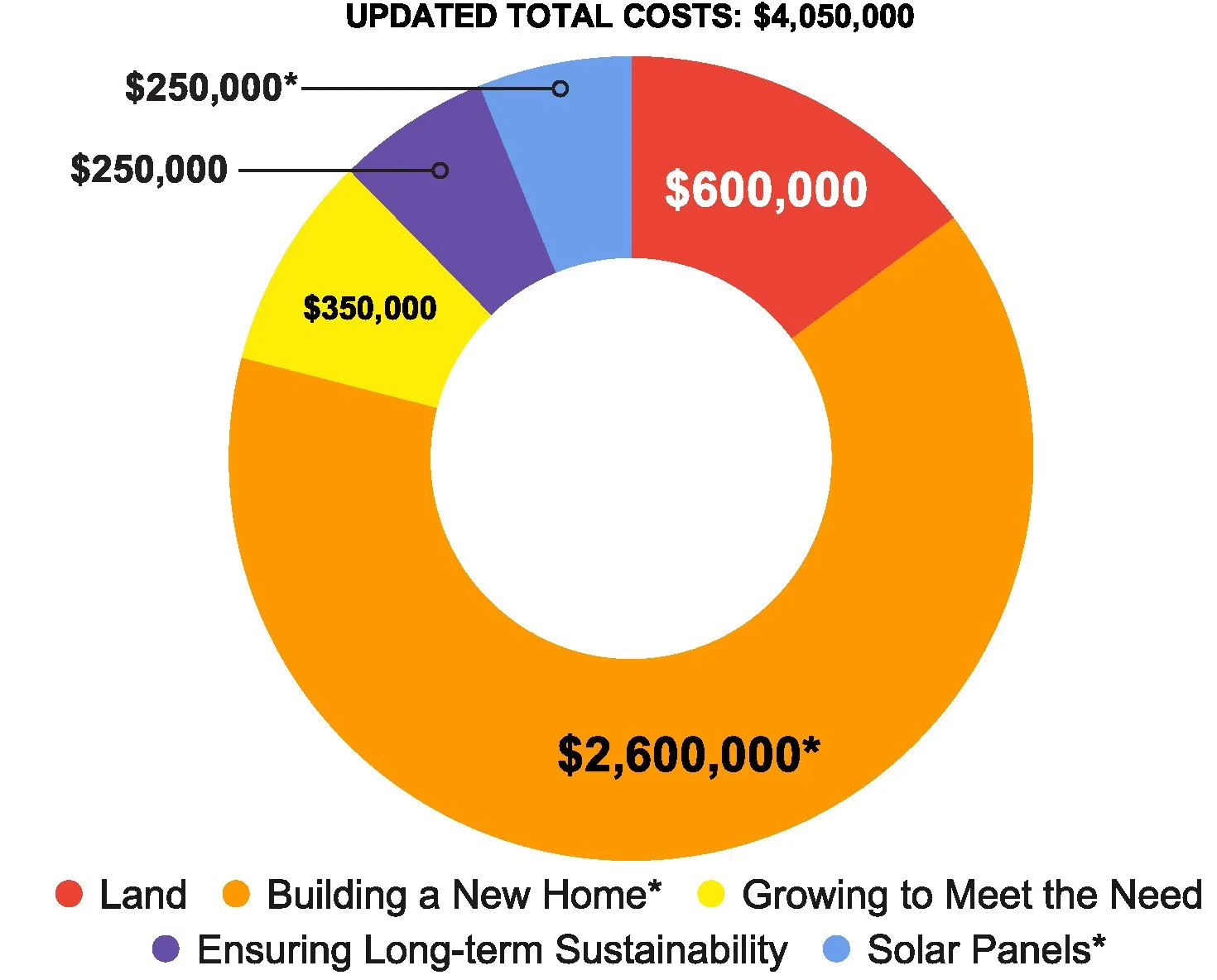
Cost: $4,050,000
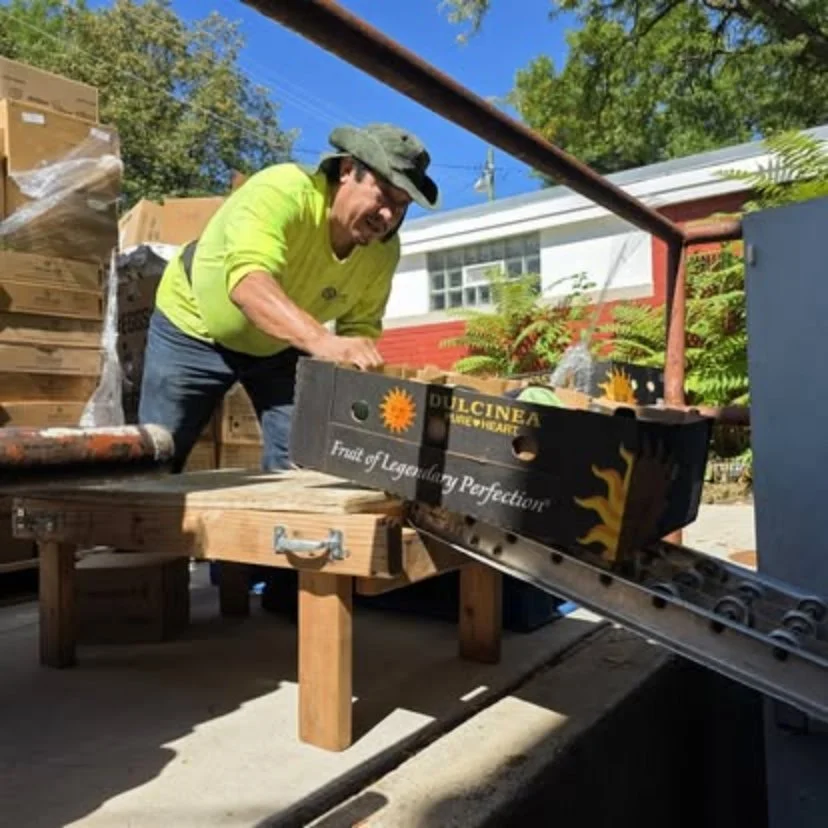
Land: $600,000
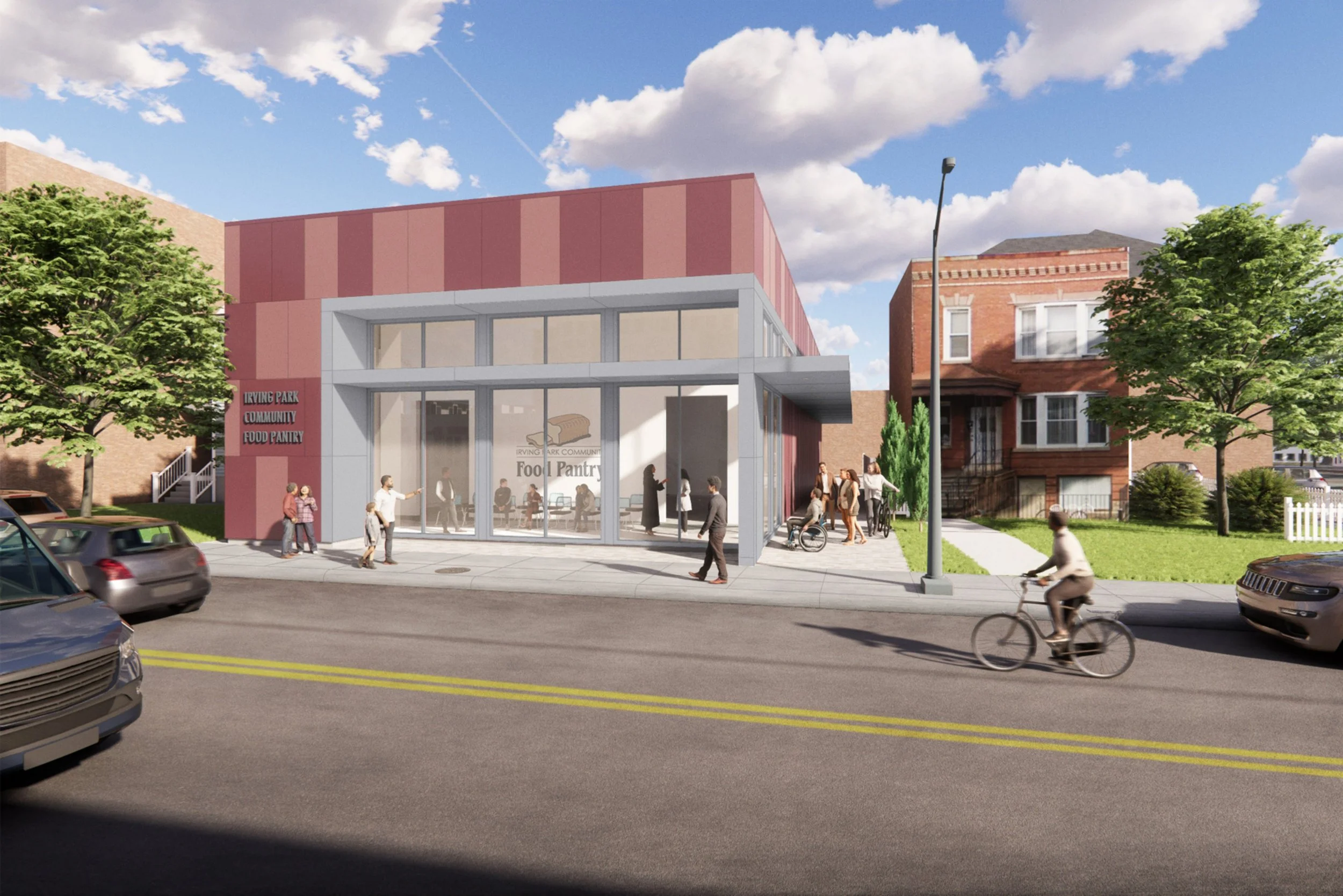
Thanks to a partnership of more than 40 years with Irving Park Lutheran Church (IPLC), the Pantry will build a 4,500‐square foot building for food distribution and other services on vacant lots at 4111 North Pulaski Road. IPLC, as owner of the property, is providing a 30‐plus year lease that recognizes the Pantry’s invested capital as prepaid rent. IPLC is participating robustly in fundraising and construction of the building. (For more information on the long‐term arrangement between the pantry and church, see the Frequently Asked Questions below.)
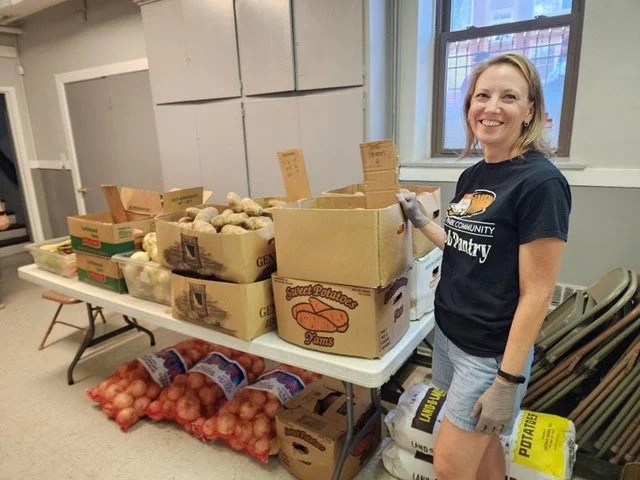
Building a New Home: $2,600,000
Space to double, and eventually triple, the number of people we feed each year
Fully ADA‐compliant space for clients and volunteers with mobility challenges, in addition to a better shopping flow
A safe sheltered area for clients to queue up in extreme weather and an indoor reception area
Expanded walk‐in refrigerated space and dry storage, allowing us to expand food choices and the number of clients served
A highly visible presence with easy access to public transportation and ample parking
Private space where clients can speak with our social worker about their personal situation and get help applying for public food benefits and other services
Room to accommodate community projects like back‐to‐school supply collections, winter coat drives, and holiday gift initiatives for clients’ children
Stability to plan and grow without worrying about having to move for decades
The new building will provide a grocery store experience, not a pantry experience – the gold standard for serving people with dignity.
Amenities will include:
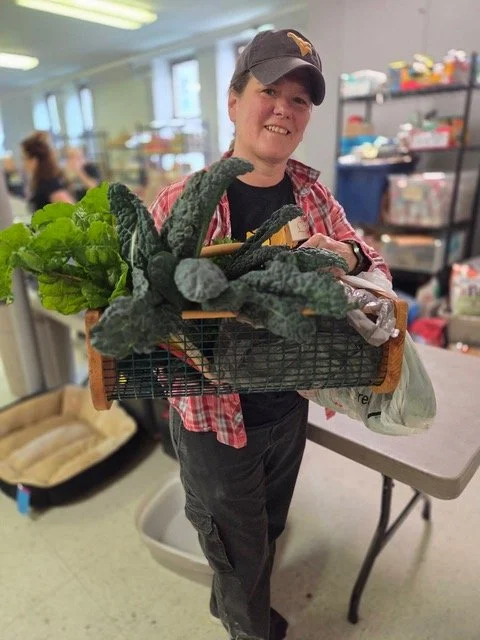
Growing to Meet the Need: $350,000
The Pantry’s new long‐term home will allow us to expand our days and hours of operation so that we can serve more of our neighbors facing food insecurity. As our financial ability and volunteer capacity grows, we can double or even triple our impact.
Built into this capital campaign are funds to expand the support we provide to our neighbors. The Pantry will need to secure more food, recruit and train more volunteers, and hire additional staff to meet this growing need.
FOOD ‐ At present, Greater Chicago Food Depository (GCFD) is our primary source of food. As GCFD faces government cuts and increased demand, the Pantry will need to find other vendors. Campaign funds will subsidize food purchases for the first two years of expansion while we build up our annual fundraising.
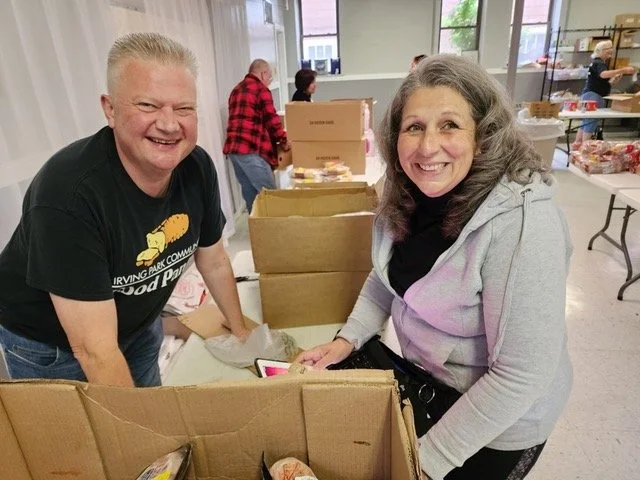
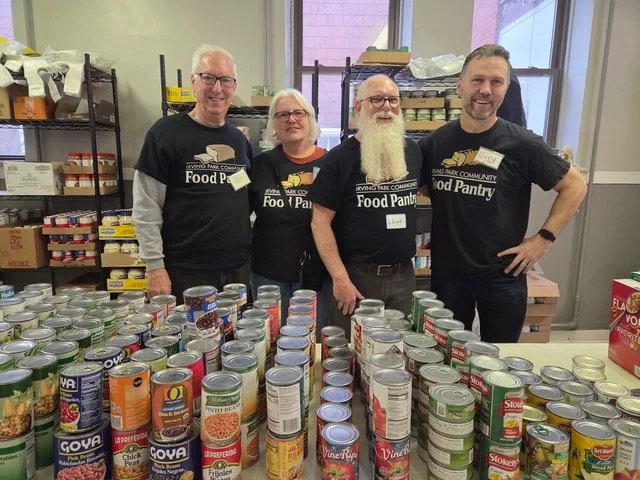
VOLUNTEERS ‐ Our almost entirely volunteer‐run organization leverages more than 12,000 volunteer hours annually from more than 100 volunteers. As our hours expand, we will engage people from our wait list and recruit more volunteers as needed.
STAFF ‐ The Pantry currently has the equivalent of only 1.5 full‐time employees. To effectively run a more robust operation, we will need to add staff. Campaign funding will allow us to expand operations staff to meet the growing needs of our community.
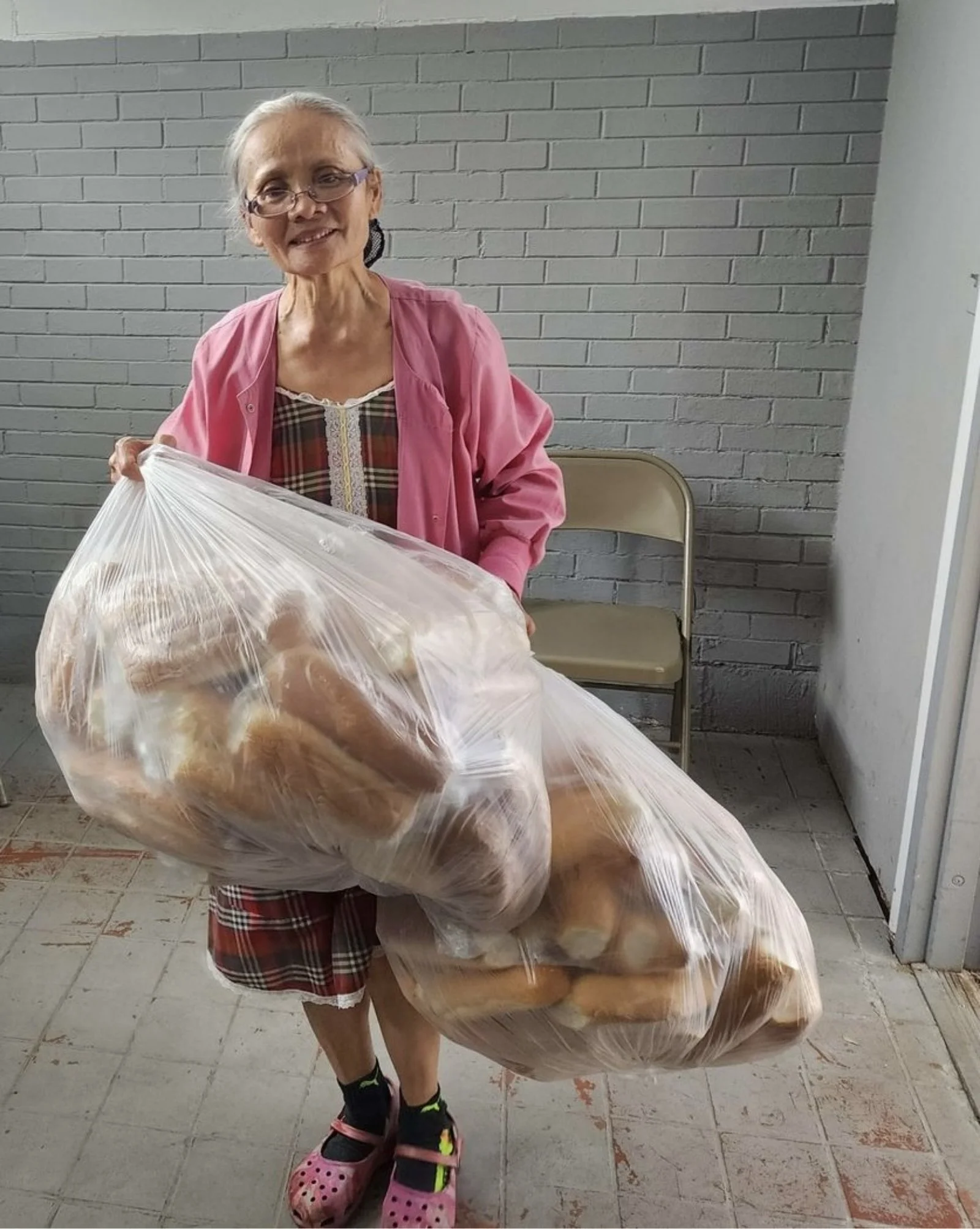
Ensuring Long-term Sustainability: $250,000
To ensure we’re here to address the current and future needs of our neighbors, we will invest in hiring our first director of development.
Campaign funds will provide their full salary in year one, and half their salary in year two as they increase donations and build partnerships for in‐kind donations.
We will also establish a reserve fund with 90 days of cash on hand. Interest earned on the account will supplement ongoing operations. This fund will provide peace of mind and flexibility, ensuring we continue providing food to those in need, no matter what.
Solar Panels: $250,000
Solar panels will lower electricity bills over the life of the building and reduce our reliance on fossil fuels. While it’s difficult to predict energy savings, we expect the panels will pay for themselves over time with utility cost savings. Potential state and federal incentives, and solar renewable energy credits may accelerate the payback period.
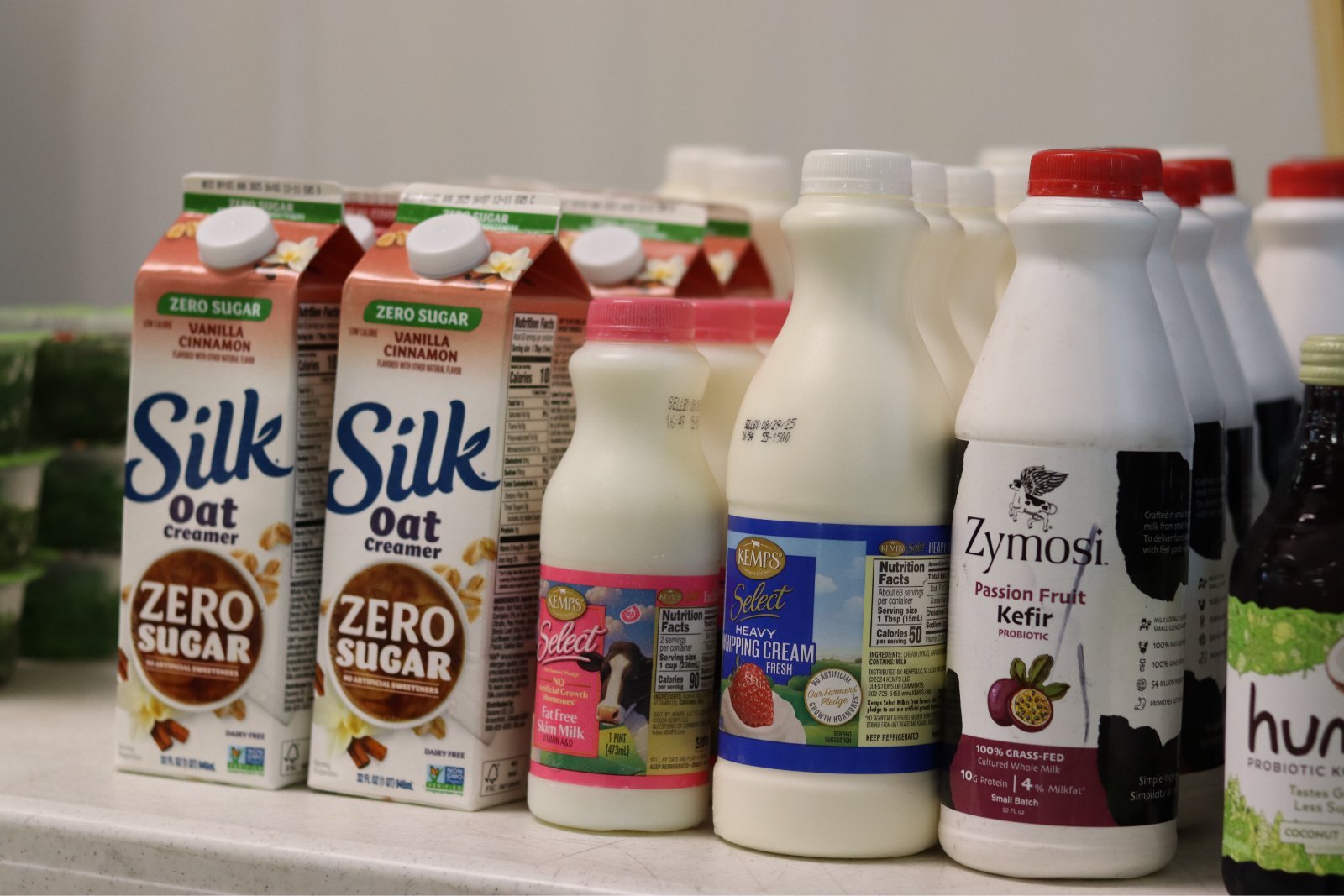
“As a child, my family received food assistance and it really helped. I was able to survive and thrive because of it. Government cheese, powdered milk, and black and white boxes of raisin bran are burned in my brain. I wouldn't be where I am without that nourishment. I was able to go to school and not be hungry. That’s why I volunteer here today.” ~ Pantry volunteer
HOW YOU CAN HELP
Pledge Support
The good news is we’re well on our way!
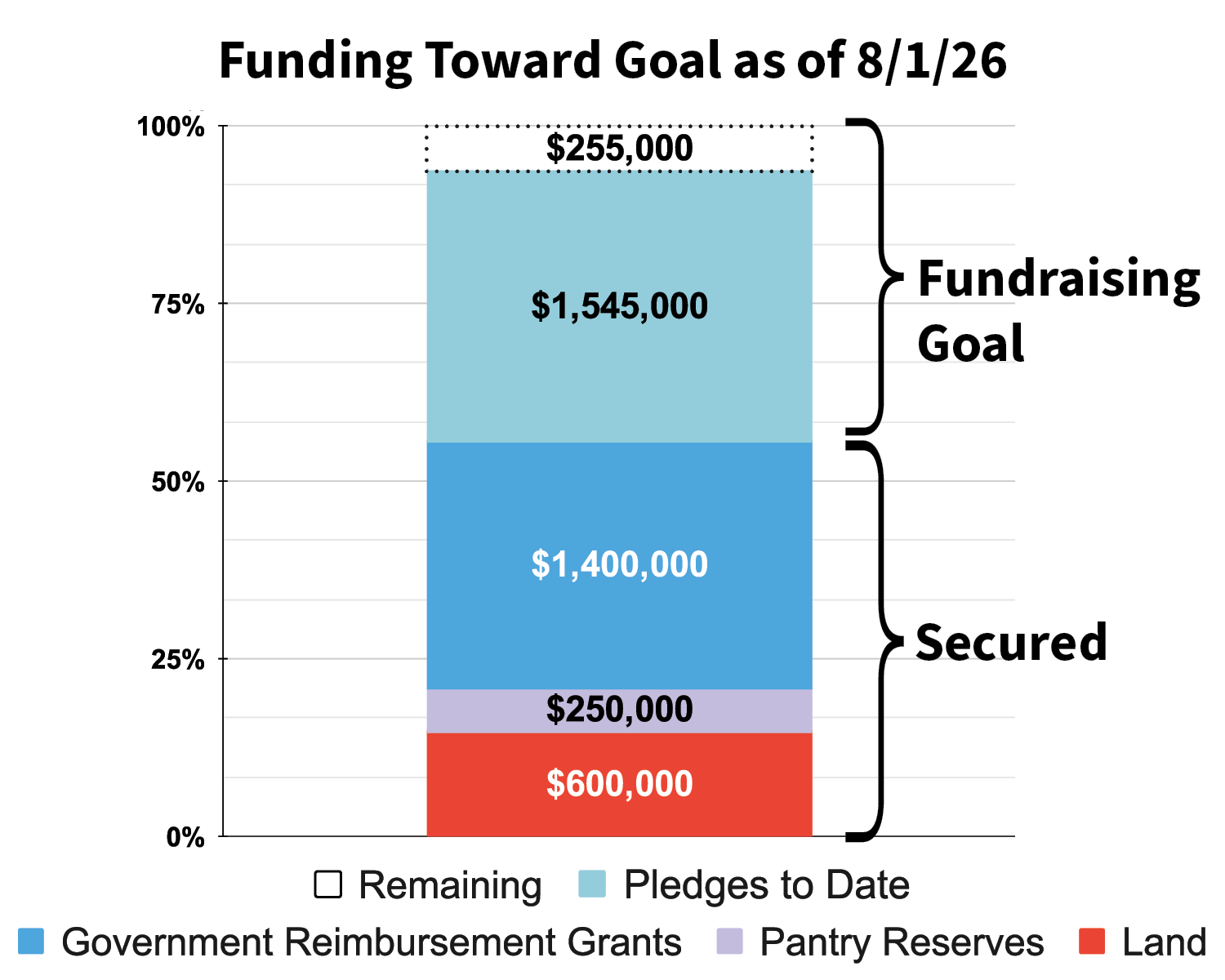
In Phase One, the Pantry began discussions to secure a long-term lease and $1.65M to construct, furnish, and equip the new building.
$1M+ grant from the City of Chicago
$400K grant from the State of Illinois
$250K from Pantry reserves
Now for Phase Two, the Pantry is launching the Building Our Future, Feeding Our Community campaign to raise at least $1.8M more to complete construction, grow to meet the unaddressed needs, and ensure long‐term sustainability.
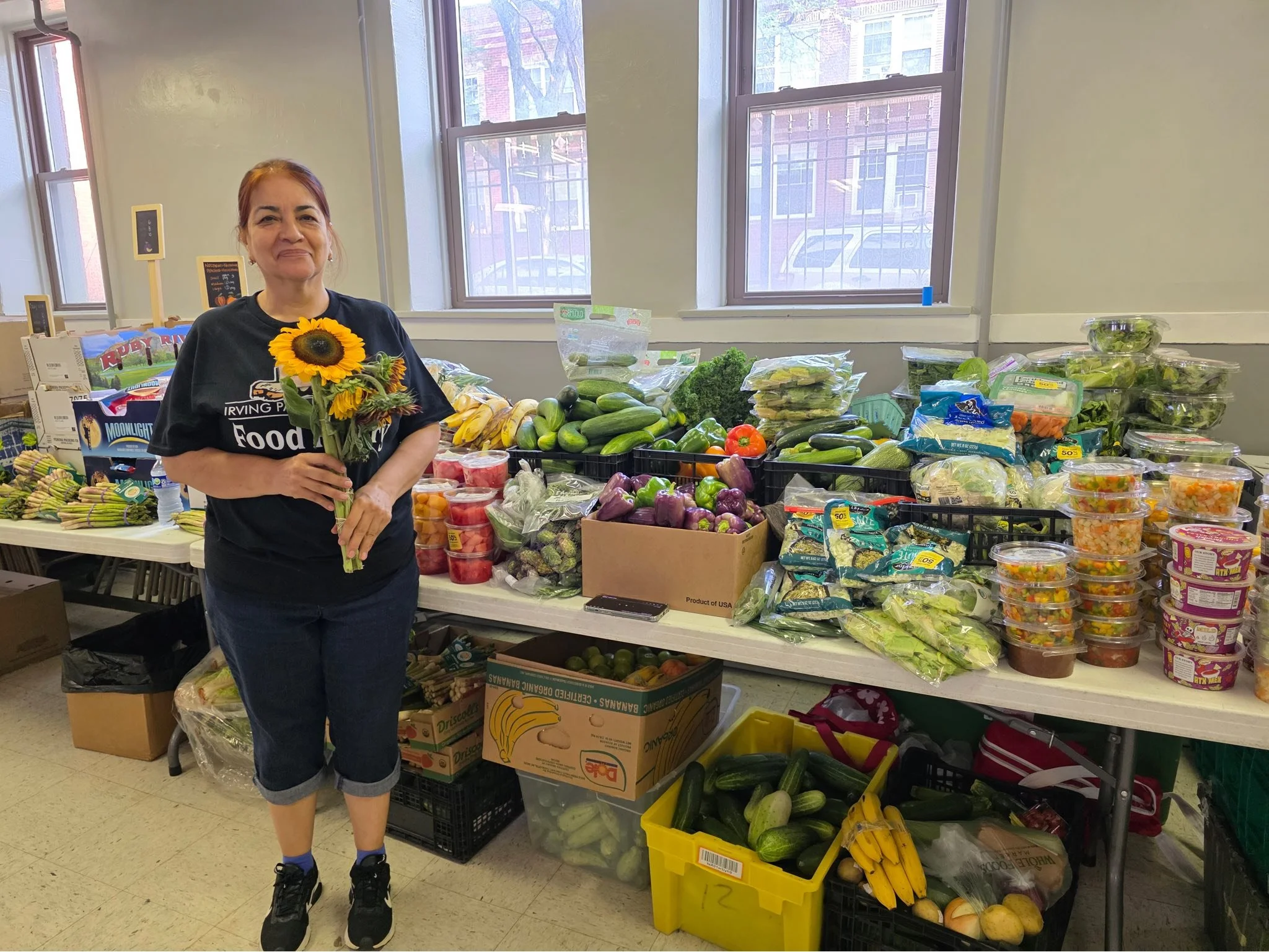
We’re asking you to pledge your support now and commit to contributing annually over three years. Of course, we welcome any and all contributions based on when you’re able to donate.
You can support the Pantry’s capital campaign by:
Making a pledge or outright gift in cash, stock, IRA distribution, or other assets
Naming a part of the new pantry in honor or memory of someone, see naming chart.
Including the Pantry in your will or estate plan
RECOGNIZING OUR DONORS
Donors to the campaign will be acknowledged in print and on social media, and will receive periodic updates on the project’s progress. All gifts of $5,000 or more will be recognized on a donor wall at the new Pantry building.
“Older people are always giving up something – like medicine or food – to keep their roof over their head. They shouldn’t have to. No one should go hungry.” ~ Mary Ann Eisenhart Ballard, Pantry volunteer
OUR PROGRESS
TIMELINE:
2025
Assess needs, secure large government capital grants, prepare campaign
2026
Request and secure leadership and major gifts
Expand fundraising campaign to broader community
2027
Begin construction
Grand opening of Pantry’s new home, 2027!
FREQUENTLY ASKED QUESTIONS
-
For many reasons! 1) Our current six‐month lease means constant uncertainty. 2) Our lease is limited to three days per week (for deliveries, set up, distribution and take down), severely restricting how often we’re open. 3) We have insufficient indoor waiting space for clients, resulting in long lines outside in all weather. 4) Our basement location with stairs makes access extremely difficult for clients with mobility issues. 5) A lack of food storage space limits our ability to feed more people.
-
The Pantry board increased the budget for the project by $350,000 to a total cost of $4.05M. That includes $250,000 for solar panels to lower electricity bills over the life of the building and reduce our reliance on fossil fuels. While it’s difficult to predict energy savings, we expect the panels will soon pay for themselves with utility cost savings, state and federal incentives, and solar renewable energy credits.
The budget also includes an additional $100,000 in contingency funds (bringing the fund to 25% of the construction budget). This factors in building material increases and global economic uncertainty since the original budget was drafted 18 months ago.
As of June 1st, the Pantry’s capital campaign has reached $1.35M in pledges, just $450,000 away from our new goal of $1.8M. We are so close!
-
We’re glad you asked. First, for clients. As our future home’s only tenant, we can dramatically increase the number of days we’re open and better meet the needs of our community. The building design will vastly improve clients’ experience.
Second, for stability. After many years there, our first church home sold its building and relocated. Our current church home only has space for the Pantry three days per week. The 6-month lease will be replaced with a 30-year lease that counts our contribution to construction costs as prepaid rent.
Finally, we have a remarkable opportunity with land provided and $1.4M secured in grants – money that cannot be allocated for food. We can take the Pantry to the next level with $1.8M more. By launching this capital campaign, we’re increasing our fundraising capacity and broadening our community of supporters, which will benefit the Pantry for years to come.
-
The Pantry board toured multiple properties for rent, but monthly rents were typically $6,000-$8,000 and none met our requirements. Renting an alternative site would require forfeiting the $1M+ grant from the City which can only be used at the 4111 N Pulaski site.
-
IPLC and the Pantry have signed a (non-binding) Letter of Intent (LOI) which spells out initial parameters of the partnership. The next step is developing a lease. The land is owned debt-free by IPLC and is tax-exempt, and the building cost will be paid by a combination of grants, donations and financing. The Pantry will distribute food and services from this location for a term of at least 30 years as the building’s sole tenant. Pantry capital invested in the building’s construction will be considered prepaid rent. The Pantry will be responsible for operating expenses including financing costs, utilities, insurance and cleaning services. IPLC will retain ownership of the lot and the building and will provide maintenance and repairs in accordance with lease terms. Lease terms will include provisions for early lease termination by either party and potential sale of the building that will recognize and refund to the Pantry any remaining invested capital. Pro bono attorneys from Katten Muchin will represent the Pantry in lease negotiations. The lease will be subject to approval by IPLC and the Pantry’s board.
-
Over its 42-year history, the Pantry has weathered economic downturns, a pandemic, and disruptions to government-provided food and funding. During this time, we have never closed our doors, providing food and other assistance to all who visited. This is accomplished through the efforts of many in our community who understand and share the importance of the Pantry's mission. With a full-time staff equivalency of 1.5 employees, more than 100 volunteers, generous community support, and zero debt, the pantry has demonstrated solid financial management and its ability to sustain its operations in good times and bad.
-
We’re fortunate to have had a strong partnership with Irving Park Lutheran Church since the late 1980s. This growing congregation has a strong financial position thanks to a generous and expanding membership, earned revenue, sizeable bequests, and good management. For all these reasons, plus the trust and relationships we’ve built over many years, we are confident IPLC will be a strong partner for decades to come.
-
No. All donations go directly to the Pantry and will be used for prepaid rent, expansion, and long-term sustainability.
About the Campaign
-
Gifts received in excess of the Building Our Future, Feeding Our Community campaign goal will allow us to ramp up distribution even faster, doubling and soon tripling the number of days we’re open for hungry neighbors.
-
Long-term financial sustainability is a top priority for the Pantry’s board of directors. That’s why we’ve included a 90-day reserve fund, a Director of Development, and upgraded fundraising practices as core components of this campaign.
Simultaneously, we invite individuals to include the Pantry in their estate plans to help ensure the Pantry’s future. Already, several individuals and couples have made the Pantry part of their legacy; our goal is 10 more legacy participants through this campaign. Please consider joining them.
-
The City and State grants are designed to reimburse construction expenses rather than pay them upfront. As a result, short-term financing may be necessary as a bridge between payments to building contractors and reimbursement from the City and State. Favorable financing is available through the Illinois Facilities Fund. We anticipate that once expenses are reimbursed, the Pantry will retire any debt it has incurred.
-
The $1.036 million City of Chicago Community Development Grant is funded in part with proceeds from the City’s Housing and Economic Development Bond. Bonds provide a relatively safe and stable source of funding.
Making a Pledge
-
Yes! We hope so. Supporters of the Pantry are asked to make a personally meaningful gift to the Building Our Future, Feeding Our Community campaign over and above their ongoing, regular annual support. While we want to have strong support for this effort, we must also continue to provide for ongoing food distribution.
-
Yes! We are inviting pledges over a 3-year period, with payment timing of your choosing. One-time gifts or shorter pledge periods are also welcome. Note that because the State and City grants are reimbursable, your early donations will help minimize our need for bridge financing.
-
Yes, but written statements of intent, while never legally binding, give us an indication of what we can expect and allow us to confidently move forward with construction plans. Please complete the Statement of Intent form indicating how you intend to respond, regardless of the amount of your response.
-
Yes. Gifts of property, Qualified Charitable IRA distributions, appreciated stock, mutual funds, in-kind gifts needed in property improvements, cash value from insurance policies or policy loan proceeds, Certificates of Deposit (CDs), bonds, and annuities are just some of the ways you can give. Any and all charitable gifts are tax-deductible regardless of their form. All gifts may be subject to restrictions and limitations, so it is wise to consult your financial adviser or accountant. Please contact the Pantry office for non-cash gifts.
-
Gifting appreciated securities or properties before liquidation likely avoids any capital gains you may incur from the sale of that asset. Consult your financial advisor or accountant.
-
If you are age 70½ or older and have a traditional IRA, you can make a Qualified Charitable Distribution (QCD) directly from your account to charity, up to $111,000 per year. Because the funds go straight to the charity, the amount is not counted as taxable income to you. This allows you to support a cause you care about, avoid income taxes, and if you are age 73 or older, have it count toward your Required Minimum Distribution (RMD). For many people over age 70½ with a traditional IRA, this is the most tax-efficient way to give. If your retirement savings are in a 401(k) or 403(b), you can roll those funds into an IRA and then use this gifting method. QCDs are easily facilitated by contacting your IRA Administrator. Consult your financial advisor or accountant.
CONTACT US
Do you have questions about the campaign or how you can help? Reach out to Bill Mengebier, Capital Campaign Coordinator.
774-437-3141
campaign@irvingparkfoodpantry.org